


Prescribe Life
Coaching intelligence that works between sessions.
An AI performance-intelligence platform for leadership coaches. Behavioural science, biometric data and an AI co-pilot flag burnout risk between sessions.
- Product
- PrescribeLife.AI
- Domain
- Health, Care and Wellbeing
- Category
- AI platform · Web + mobile
- Platforms
- Coach web portal, Client mobile app
- Services
- Product design, Mobile app development, Web development, AI agent engineering, Rebranding
- Practices
- AI Agentic Systems and Data, Application Development, Innovation and R&D
- Year
- 2025–2026
Challenge
Leadership coaches see a client for an hour at a time, but the signals that predict burnout show up in between: sleep, recovery, energy and mood. Prescribe Life needed a product that could read those signals and turn them into better coaching, without feeling clinical.
Approach
PrescribeLife.AI is a performance intelligence platform for leadership coaches. It combines behavioural science, biometric data and AI to surface what is affecting a client's resilience, recovery and wellbeing between sessions.
Its AI co-pilot, Preslie.AI™, tracks patterns, flags risks and delivers personalised micro-strategies, while coaches get a full 360° view of each client's goals, habits and readiness, so they can coach smarter and prevent burnout.
03Insight
Making health technology feel more human without making it less intelligent.
Health technology often leans hard into clinical visual language. We moved in a different direction: an experience that communicates trust and intelligence while still feeling warm, approachable and human. The visual language balances clarity and emotion, structure and softness, intelligence and calm.
04Hard problem 01 of 02
Read a person's resilience from a phone, a watch and a sixty-second selfie.
How do you measure recovery, stress and readiness across every iPhone, every Android and every wearable, including clients who own no wearable at all, and still give a coach a picture they can trust?
Coaching runs on what the client remembers to say in the room. The signals that predict burnout show up in between: a week of short sleep, a falling heart-rate variability, a mood that won't lift. If the measurement is patchy or wrong, the coach either ignores it or acts on noise. Either way the product stops earning its place in the session.
Why it’s hard
- Every device speaks a dialectApple and Android store health data differently, wearables overlap and disagree, and even HRV is a different measure on each platform.
- Not everyone wears a sensorMany leaders don't own a wearable. A product that only works for the quantified few leaves out the clients who most need noticing.
- Bodies and feelings disagreeSomeone can sleep well and feel empty, or feel fine on a body running on fumes. Average the two and you hide the very thing a coach needs to see.
Through the loop
Frame
Two questions, not one dashboard. We sat with how coaches prepare for a session and found they ask two different things: how is this person's body doing, and how do they feel it's going? Most wellness products blend both into a single number. We framed the measurement as two lenses, objective and subjective, read side by side, with one rule on top: no client goes unmeasured just because they don't own a watch.
Design
The body on one side. The person on the other. The objective lens reads sleep, activity, readiness and wellbeing, each score explainable down to its factors: sleep debt, regularity, deep and REM sleep, resting heart rate, HRV. The subjective lens is a ten-item burnout and resilience instrument that places a client on a five-stage scale from Burnout to Flourishing, then ten resilience drivers the client rates against their own picture of what a ten looks like. Keeping the lenses apart means a gap between them becomes a signal, not an average.
Engineer
Wearable, phone and camera, in one pipeline. Apple HealthKit and Google Health Connect feed a health-data layer that collects in the background, merges devices and handles each platform's HRV measure. For everyone else there's the camera: a sixty-second remote photoplethysmography (rPPG) face scan reads heart rate, HRV, breathing rate and blood pressure from the tiny colour changes in the skin. Then the clever part: scan results are written back into Apple Health or Health Connect, so a selfie fills the same gaps a wearable would and every downstream score improves with it.
Prove
Refuse the impossible. Admit the unknown. Every camera reading is checked against physiological limits before it's stored: a heart rate outside 30 to 220, a breathing rate outside 5 to 60, a blood pressure no human could have, and the database rejects it. Missing sensors show as missing, never as zero. Change over a programme is only called improvement when the weekly average moves by more than a set threshold; anything smaller is reported, honestly, as holding steady.
Operate
Trends over moments. In the real workflow a single reading means little, so the product leans on trends: four-week health trends, month-on-month comparisons and averaged scan history, all clipped to the dates of each coaching programme. The onboarding flow for health permissions was rebuilt several times on real usage, until connecting a device became a step people finish rather than skip.
Back to Frame
Two honest lenses, the body and the person, read side by side instead of blended into one opaque score.
- Selfie scan to four vital signs
- 60 s
- Health platforms, one pipeline
- 2
- Stages, Burnout to Flourishing
- 5
- Resilience drivers
- 10
08Hard problem 02 of 02
Build an AI coach that knows the whole person, and knows its limits.
How do you let an AI talk to high performers about stress every day, informed by their body and their mood, without it ever playing therapist or stepping between a client and their coach?
The AI is what makes the product feel alive between sessions, and also what could do the most damage. The wrong word to someone in burnout, a missed sign of real distress, or advice that sounds clinical would break the client's trust and the coach's.
Why it’s hard
- Months of data, seconds to answerSurveys, sleep, readiness, wins, concerns and habits pile up. Sending all of it on every message is slow, costly and makes the model worse, not better.
- Close to mental healthClients talk about stress, sleep and pressure. Language matters: a clinical label or an instruction can land as judgment.
- The human stays in chargeThe coach owns the relationship and the client owns their privacy. The AI has to support both without replacing either.
Through the loop
Frame
Not a chatbot. The bridge between sessions. We framed Preslie by what it is for: keeping the coaching going between sessions, and noticing what the coach would want to know. Then we wrote down what it must never do: diagnose, prescribe, pile pressure on someone who is already depleted, or keep a serious concern to itself.
Design
Tone follows the stage. Preslie reads where the client is and changes how it speaks. In Burnout it goes ultra-gentle, rest first, no plans. In Flourishing it celebrates briefly and helps sustain. The work splits into three orchestrated modes, conversation, behaviours and tips, each with agents for the reply, the suggested next replies and the actions that follow. Concerns are designed as a handoff: they become coaching topics for the human coach, and the client can hide a conversation while the coach still sees that something needs attention.
Engineer
The whole person in 150 tokens. A context agent compresses everything Preslie needs into about 150 tokens: the client's stage and score, sleep, activity, wellbeing and readiness, recent wins, focus drivers, today's behaviours and any open concerns. It refreshes the moment that data changes. Each job gets the right model: a frontier model for conversation, fast models for suggestions and insights, a tiny one for spotting wins. Every reply then passes a deterministic safe-language filter, so 'anxiety' becomes 'stress', 'you should' becomes 'you could', and nothing promises to treat or cure.
Prove
Precision over panic. A concern classifier that flags everything is as useless as one that flags nothing. Ours looks for specific signals, such as hopelessness, self-harm, severe insomnia or substance use, with explicit examples of what not to flag and a target of flagging only five to ten percent of messages. Low-confidence calls are dropped. Related messages over thirty days thread into one topic instead of ten alerts, and an urgent concern clears everything else off the screen.
Operate
Upgrade the brain without touching the body. Preslie has moved through several model generations since launch without rebuilding the app, because models are configuration, not code. Every AI call has a fallback, so the client always gets an answer. Daily insights are cached to keep costs flat as clients grow, and fixes ship as over-the-air patches. Coaches close the loop with programmes, weekly check-ins and reminders sent only to the clients who haven't checked in.
Back to Frame
Preslie knows the whole picture, speaks gently, and hands the hard moments to a human.
- Context per AI turn
- −90%
- Specialised agents
- 22
- Target flag rate for concerns
- 5–10%
- Replies through the safe-language filter
- 100%
All case studies
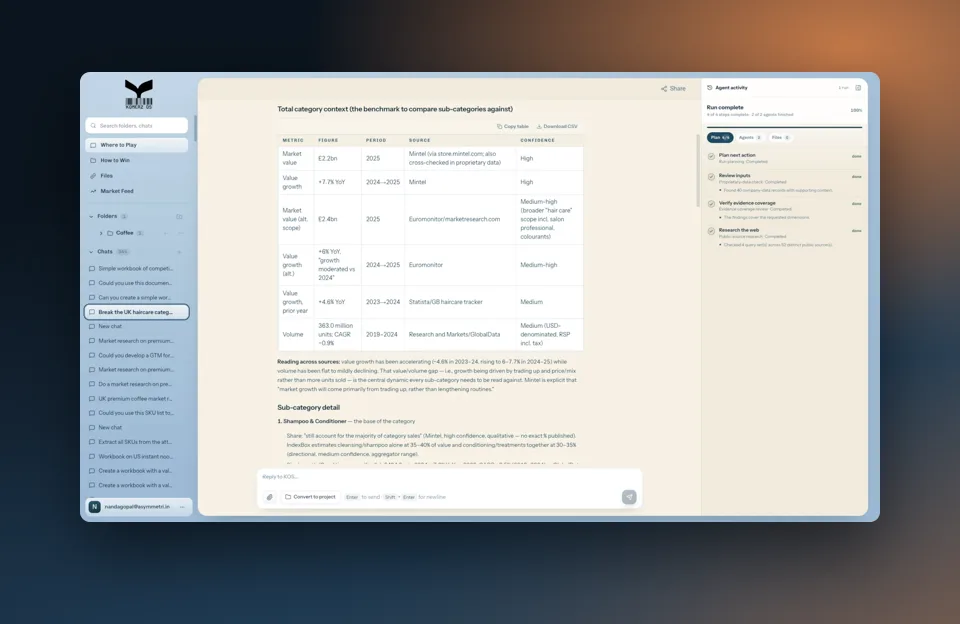
AI platform · Commercial planning
Komerz OS
An AI commercial-planning platform for consumer brands. A research agent answers where to play, then a planning workspace builds how to win, down to a P&L that reconciles.
Read Komerz OS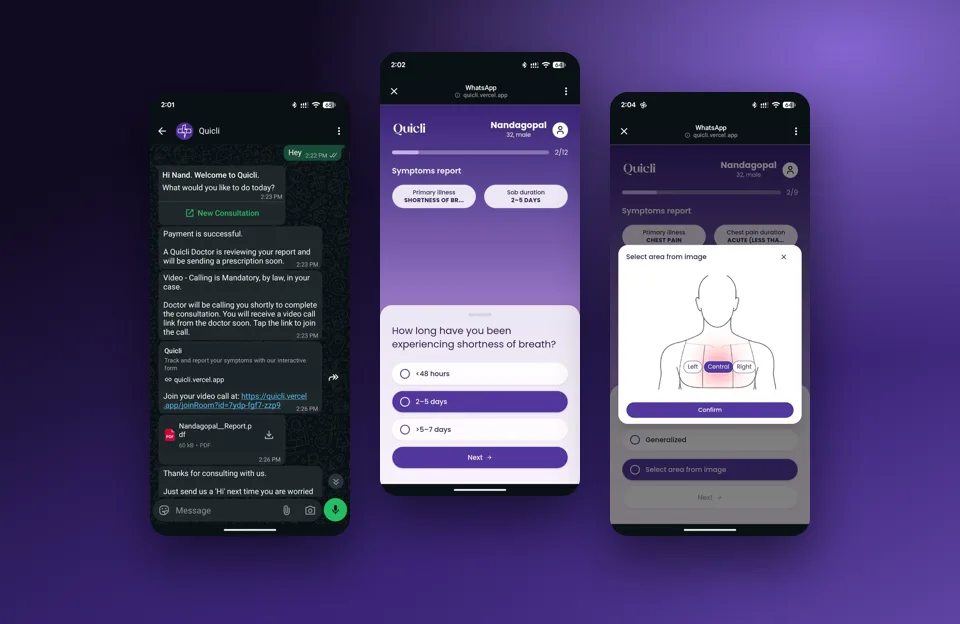
Health platform · WhatsApp + web + doctor app
Quicli
Doctor consultations on WhatsApp. Say 'Hi', describe your symptoms in your own language, and a real doctor's prescription arrives in the same chat, with medicines and tests ready to order.
Read Quicli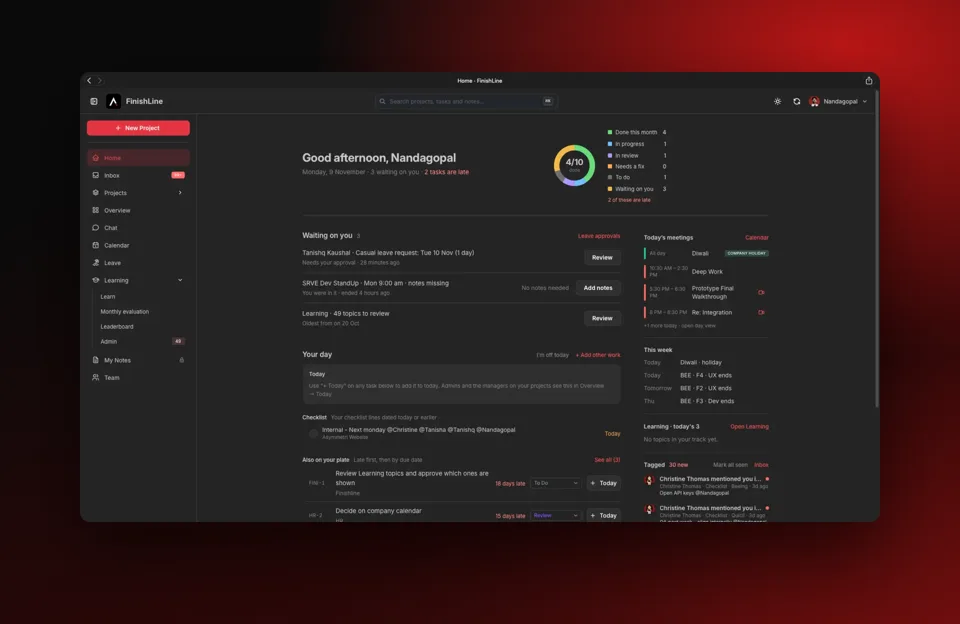
Internal platform · Web app + AI agents
FinishLine
Asymmetri's own delivery operating system: projects, QA, clients, chat and calendars in one secure app, where AI agents work as the person who sent them.
Read FinishLine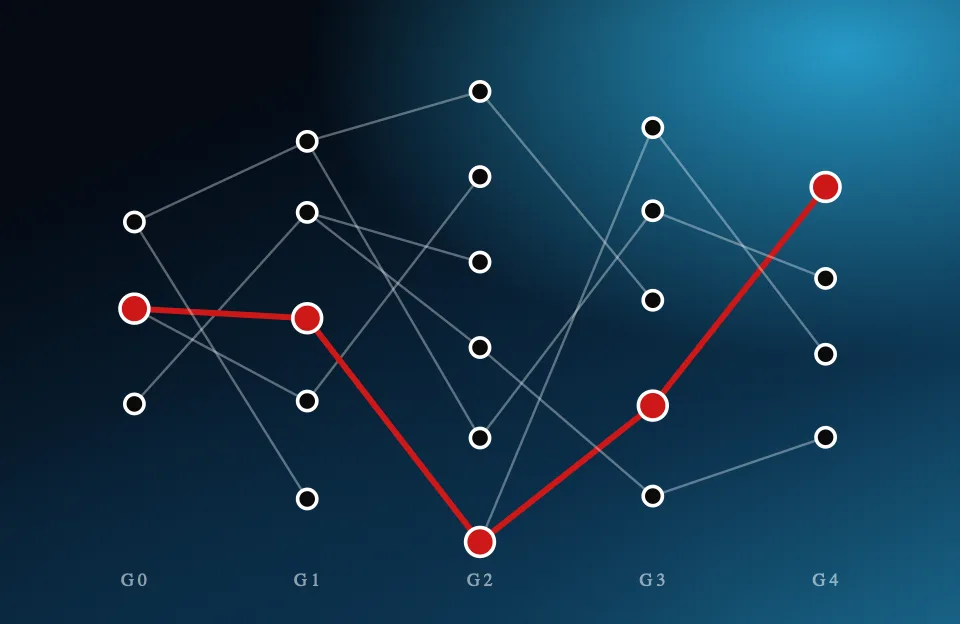
Research · Multi-agent AI
Project Protocol
Asymmetri research into shared machine cognition: can teams of AI agents write what they learn into a shared, inspectable layer that the next agents inherit and build on?
Read Project Protocol