


Quicli
From 'Hi' on WhatsApp to a doctor's prescription in minutes.
Doctor consultations on WhatsApp. Say 'Hi', describe your symptoms in your own language, and a real doctor's prescription arrives in the same chat, with medicines and tests ready to order.
- Product
- Quicli
- Domain
- Health, Care and Wellbeing
- Category
- Health platform · WhatsApp + web + doctor app
- Platforms
- WhatsApp, Patient web app, Doctor app (iOS, Android, web)
- Services
- Product design, Web development, Mobile app development, AI engineering
- Practices
- AI Agentic Systems and Data, Application Development
- Year
- 2025–2026
Challenge
In India, the first doctor most people consult is a search engine, and one search for a symptom can turn a cough into a night of worry. Seeing a real doctor means an appointment, a queue, a fee and often a video call nobody asked for. Quicli wanted to make proper medical advice as easy as sending a message, for everyone: the office worker between meetings, the parent with a feverish child, the retired veteran who finds apps confusing.
Approach
Quicli is a symptom-to-resolution service that starts on WhatsApp. A patient sends 'Hi', creates a profile for themselves or a family member, and answers a few simple questions about their symptoms in their own language. Their answers become a structured clinical summary for a real doctor, who reviews it and sends a signed prescription back to the same chat.
Prescribed medicines and lab tests are added to a cart automatically, the prescription can be read in the patient's own language, and Quicli checks in when the course of medicine ends. We designed and built the patient experience, the doctor app and the backend that connects them.
03Insight
Meet people in the app they already trust, and do the hard parts where they can't see them.
Nobody downloads a new app when they feel unwell. Everyone already has WhatsApp. So WhatsApp became the front door and the delivery channel, and everything a chat window can't do well (a branching medical history, pictures of the body, payment) lives one tap away in a page that feels like part of the conversation. The complexity is real; the patient just never has to meet it.
04Hard problem 01 of 02
Take a doctor's history from someone who will never download an app.
How do you take a proper clinical history from a worried parent, a 64-year-old veteran or a first-time smartphone user, in their own language, without asking them to install anything or type a single medical word?
If the intake is confusing, people abandon it and go back to searching their symptoms. If it's vague, the doctor has to start the conversation from scratch, and the ten-minute promise and the low price both collapse. The intake has to be simple enough for anyone and precise enough for a clinician.
Why it’s hard
- WhatsApp is a narrow pipeThree buttons per message, twenty characters per button, approved templates only after 24 hours, and no custom interface at all.
- People don't speak in symptomsPatients describe how they feel, not what a doctor needs, often in one of many Indian languages and scripts, sometimes with low literacy.
- A dead end is a lost patientOne question with no sensible answer, or a result that says nothing, and an anxious person closes the chat for good.
Through the loop
Frame
The competitor is a search engine at 2am. Quicli's rival isn't another health app. It's the late-night symptom search that leaves people more scared than informed. We framed the product around the people most failed by apps and appointments, and around one rule for the doctor: the case must arrive structured, not as a chat transcript to untangle.
Design
Chat for the conversation. One tap for the questions. We split the job by what each surface does best. WhatsApp handles the front door, status updates, the prescription and the follow-up. A light web flow, opened from a single button in the chat, handles everything WhatsApp can't: a branching medical questionnaire, pictures of body regions to tap, voice notes, photos and payment. Questions are multiple choice; patients pick what they speak and what they understand separately, because those are often different languages.
Engineer
Thirteen thousand paths, and none of them dead-ends. Behind the simple questions sits a clinical decision tree: 23 conditions, 138 questions and 13,216 answer combinations, each mapped to a likely diagnosis, medicines, tests and advice, and each flagged if it needs a hospital visit or a video call. Every question exists in 11 languages with three phrasings, so it reads naturally. Any option that would lead to an uncovered combination is hidden before the patient sees it. An AI then writes a short clinical summary for the doctor, with a mandatory red-flag line for symptoms that need urgent care.
Prove
Audit every path before a patient walks it. A coverage audit walks the whole tree and lists every answer combination without a diagnosis. Condition by condition, those gaps were closed. Small-phone details that make or break usability, like inputs that zoom the page and break the flow, were found and fixed. And whatever the AI writes, a doctor reviews the case and signs the prescription.
Operate
A prescription people can actually read. The signed prescription arrives in the chat as a PDF, with an offer to read it in the patient's own language. Translation keeps drug names in English for safety and turns dosing like 'before breakfast' into the patient's language, rendered with fonts for nine scripts and cached per language. Ratings are three buttons; an unhappy rating turns the patient's next message into the reason. When the medicine course ends, an approved WhatsApp template checks in, with fallbacks if the message window has closed.
Back to Frame
Chat for the conversation, one tap for the questions, and the patient's own language from 'Hi' to prescription.
- Apps to download
- 0
- Languages, end to end
- 11
- Answer paths, no dead ends
- 13,216
- Conditions covered
- 23
08Hard problem 02 of 02
Get a real doctor to answer in ten minutes, for ₹99.
How do you promise a signed prescription within ten minutes at a price almost anyone can pay, when every case needs a qualified doctor's attention and doctors are only human?
Speed and price are the whole promise. A slow reply sends the patient back to searching; an expensive one excludes the people who need it most. The only way to make both work is to take every minute of busywork away from the doctor and make sure no case ever sits unattended.
Why it’s hard
- Speed against economicsA ₹99 consultation has to pay a real doctor. That only works if each case takes minutes, not a quarter of an hour.
- Doctors step awayOne unread notification can leave a patient waiting. The system can't rely on any single doctor seeing an alert.
- The prescription isn't the endA patient still has to find the medicines and book the tests. Without help, many never do.
Through the loop
Frame
The doctor's time is the product. We worked back from the promise. Ten minutes from report to prescription, at a price that has to cover a doctor, means the doctor should spend those minutes deciding, not asking routine questions or searching for drug names. The case has to arrive ready, and the routing has to make waiting impossible.
Design
A case that arrives already worked up. The doctor app opens on a prepared case: the structured summary, the patient's history and past consultations, likely diagnoses and suggested medicines and tests from the decision tree. Voice notes are transcribed. Video is offered only when the law requires it or the doctor wants it. Doctors book two-hour shifts, and each shift has a capacity, so the load is planned rather than hoped for.
Engineer
No case waits on one unread alert. When a case is assigned, the doctor gets a high-priority alert every 30 seconds. If they haven't accepted within two minutes, the case moves automatically to the on-shift doctor with the most free capacity who hasn't already been tried, and the patient is told on WhatsApp. Assignment and capacity update together in one transaction, so two doctors never get the same patient. Prescribing searches a catalogue of about 254,000 Indian medicines, and the doctor signs on screen.
Prove
Test the chain end to end. The alert and reroute chain is covered by automated tests and was verified end to end with shortened timers before release. Real edge cases shaped it: consultations created already assigned once skipped the first alert, and that was fixed. Doctor ratings and a patient feedback form close the loop on quality.
Operate
From prescription to medicine cabinet. Doctors move on and off duty automatically with their shifts. Once a prescription is signed, the medicines and lab tests are already in the patient's cart, with checkout and delivery a tap away. And because Quicli remembers past consultations, the next doctor starts with the patient's history instead of a blank page.
Back to Frame
Do the doctor's paperwork before they open the case, and never let a patient wait on one unread alert.
- Prescription promise
- 10 min
- Doctor alert cadence
- 30 s
- Automatic reroute
- 2 min
- Per consultation with a pass
- ₹99
All case studies
AI platform · Web + mobile
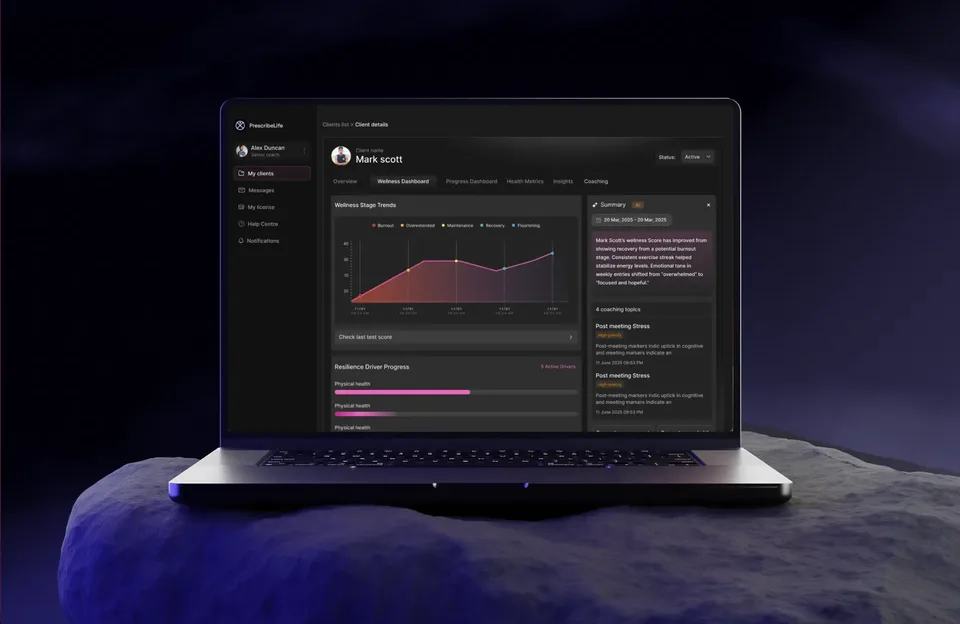
Prescribe Life
An AI performance-intelligence platform for leadership coaches. Behavioural science, biometric data and an AI co-pilot flag burnout risk between sessions.
Read Prescribe Life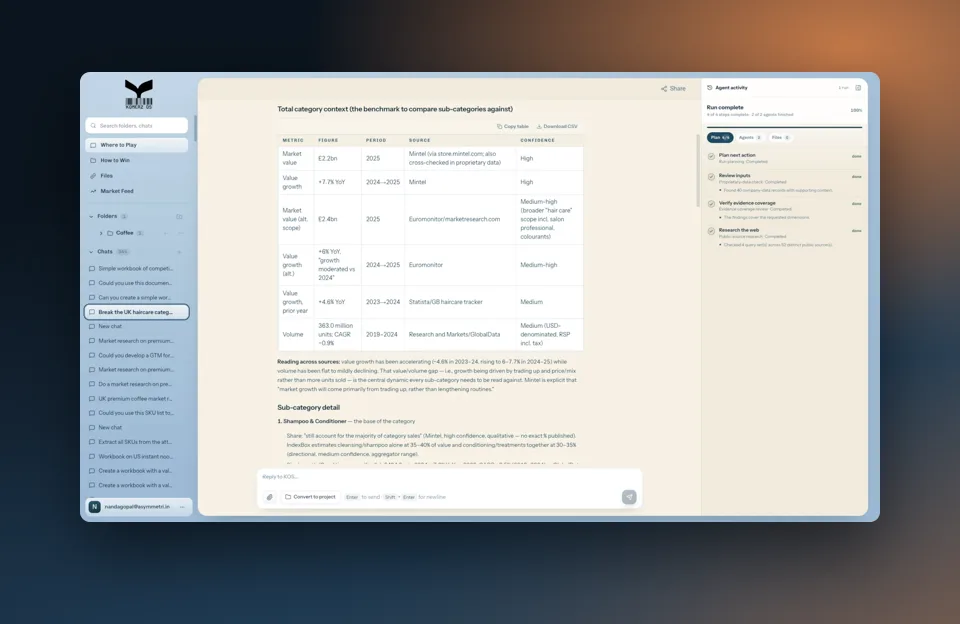
AI platform · Commercial planning
Komerz OS
An AI commercial-planning platform for consumer brands. A research agent answers where to play, then a planning workspace builds how to win, down to a P&L that reconciles.
Read Komerz OS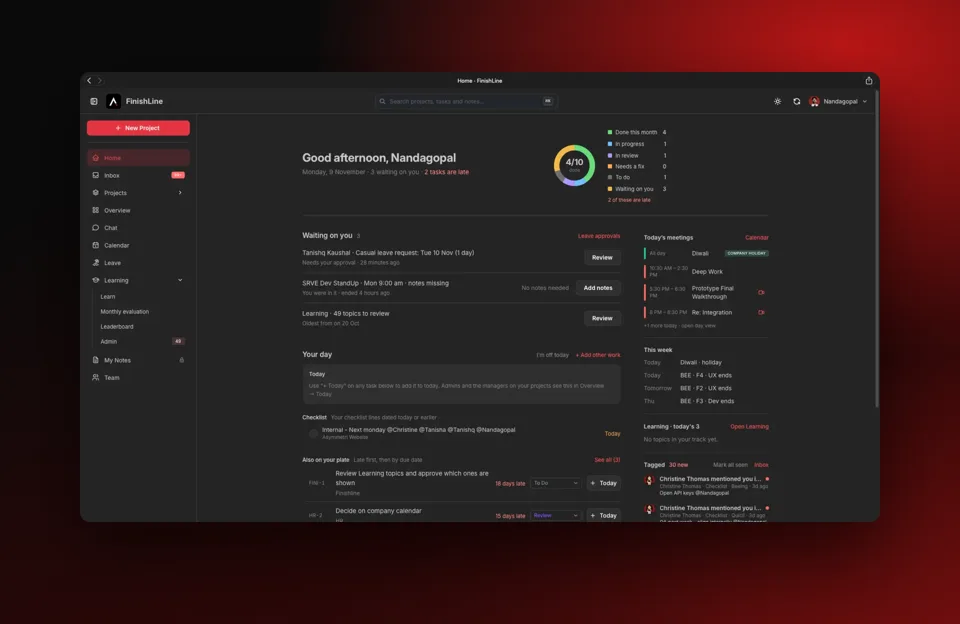
Internal platform · Web app + AI agents
FinishLine
Asymmetri's own delivery operating system: projects, QA, clients, chat and calendars in one secure app, where AI agents work as the person who sent them.
Read FinishLine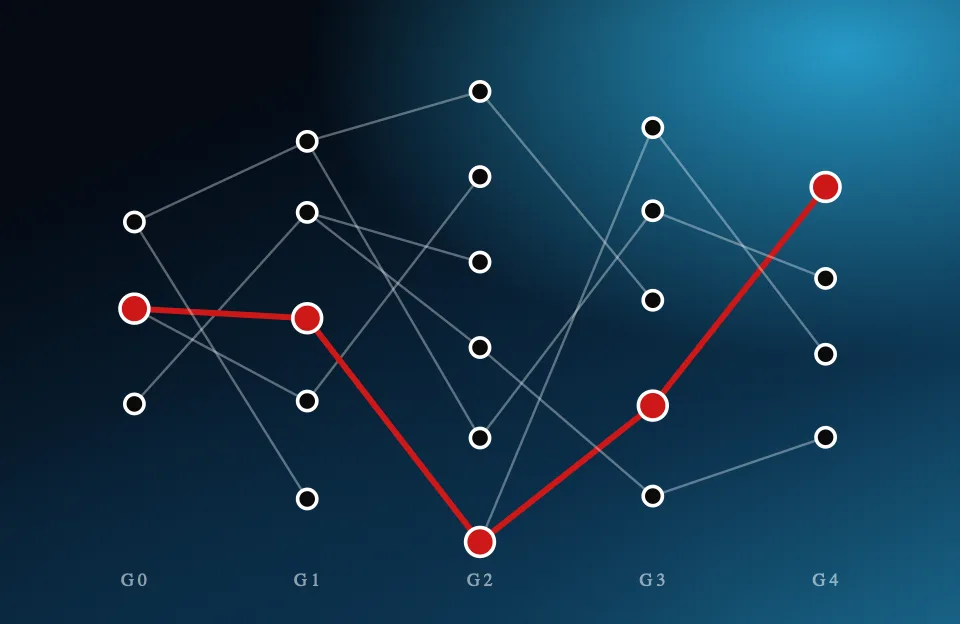
Research · Multi-agent AI
Project Protocol
Asymmetri research into shared machine cognition: can teams of AI agents write what they learn into a shared, inspectable layer that the next agents inherit and build on?
Read Project Protocol